Checking your pay stub in one system, your hours in another, your PTO balance in a third, and your personal info in a fourth: in 2026, this kind of fragmented workflow has no place in an SMB trying to move forward.
HR-payroll integration means connecting and synchronizing your different tools — workforce management, time tracking, leave management, employee profiles — so they talk to each other instead of operating in silos. The result: less duplication, fewer errors, more time for what actually matters.
Here are the 9 core benefits of HR and payroll integration.
1. Significant time and energy savings
Automating manual tasks frees your HR team for higher-value work. At , switching to an integrated HR-payroll system saved 8 hours per week on payroll processing alone, according to Valerie Rancourt-Grenier, VP of HR and Marketing.
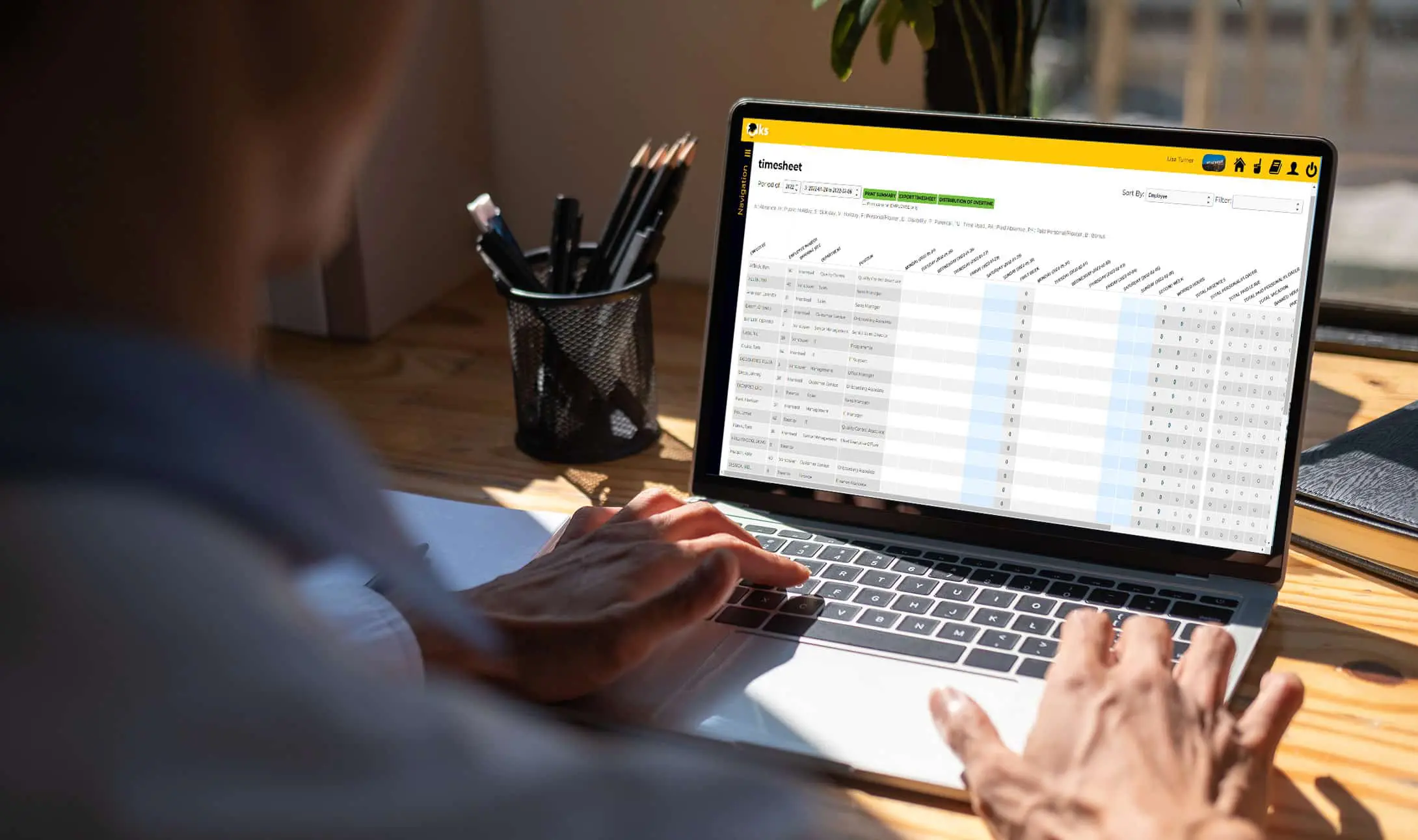
Concrete example: instead of manually re-entering hours worked into your payroll software every cycle, they flow automatically from the time-tracking module; no copy-pasting, no transcription errors.
2. Eliminating duplicate files
Every extra system means one more piece of data to keep updated manually. A that isn’t connected to your HRIS multiplies inconsistencies (an address updated in one place but not another) and adds to password and access management overhead.
3. Automating administrative tasks
Dematerialization and centralization remove repetitive, low-value work — printing, filing, searching for a paper document. Once your processes are digitized and connected, information flows without manual intervention.
4. Preventing human errors
Manual data entry is one of the leading causes of payroll mistakes; and , both financially and in terms of employee trust. An integrated system drastically reduces this risk by automating data transfer between modules.
5. Quick access to information
Need to know a team’s overtime hours or compare pay data across a role? An integrated platform gives you the answer in a few clicks, no juggling Excel exports.
6. Stronger data security
Fewer systems mean fewer passwords to manage, fewer scattered files, and a smaller attack surface. Centralizing HR and payroll data reduces the risks tied to multiplying accounts and physical documents.
7. Optimized efficiency and productivity
Integration directly supports your organizational goals by streamlining HR processes end-to-end, from recruitment through to payroll.
8. A better employee experience
With self-service features, employees can check their pay stub, update personal information, or submit a leave request without going through HR. The result: more transparency, less administrative load on your team.
9. A complete digital ecosystem
Integration creates a unified technology foundation that supports your digital transformation and your company’s long-term growth.
Going further: when HR, talent, and payroll become one
Integrating two pieces of software via an API is a good start. But it’s still two separate systems talking to each other — with the sync delays and friction points that come with it.
At Folks, HR, talent management, and payroll live in a single platform, with a single employee record. What does that actually mean in practice?
- From onboarding to first paycheck, no re-entry. Once a new hire goes through your , their information (salary, status, benefits) is already in the system by the time their first payroll run happens.
- Performance flows directly into compensation. An employee who gets a strong performance review and a raise? The change reflects automatically in the next payroll cycle — no manual form to fill out.
- One record, from hire to departure. data (skills, training history, reviews) and payroll data live in the same employee profile : useful for your HR reports and business decisions.
- One update, everywhere. A change in address, status, or role propagates instantly across every module (payroll, benefits, employee record…).
That’s the difference between systems that “talk to each other” and an like Folks, built as a single whole from the start!
Frequently Asked Questions
What's the difference between integrating two software tools and an all-in-one HR platform?
Integrating two tools means connecting two separate systems (usually via API) so they exchange data. An all-in-one platform like Folks removes that need entirely: HR, talent, and payroll natively share the same database, with no syncing to manage.
How long does it take to implement an integrated HR and payroll system?
It varies by company size and current process complexity, but a well-planned transition typically takes a few weeks. Our walks you through it step by step.
Is it safe to centralize HR and payroll data in one system?
Yes, as long as you choose a provider with recognized security certifications. Centralizing actually reduces the risks tied to scattering data across multiple, unconnected platforms.
What are the signs it's time to switch payroll software?
Frequent manual re-entry, recurring payroll errors, or the inability to pull quick reports are clear signals. Check our to assess your situation.
Is HR-payroll integration worth it for small businesses?
Absolutely. SMBs often have the most to gain from centralizing, since they typically have fewer dedicated resources for administrative management.
Ready to go all-in-one?
Ressource publiée par